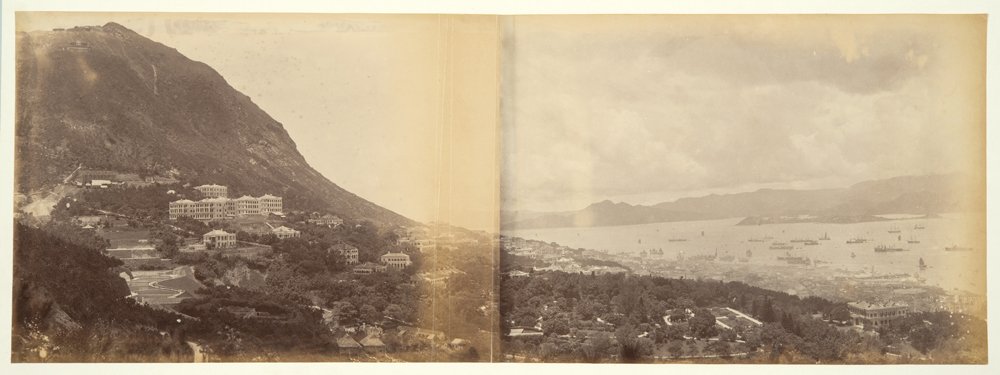
Hong Kong's transformation from a quiet fishing village to one of the world's great trading centers unfolded with remarkable speed. The island was ceded to Britain in 1842, and within decades its deep harbor and strategic position made it the most important entrepôt in Asia. The free-port policy attracted merchants from across the globe, and the harbor handled more tonnage than any port in the region.
Unlike Shanghai's treaty-port concessions, Hong Kong was administered as a British territory. British law applied throughout. The profits from the China trade flowed through its counting houses, and the city became the gateway where East met West—a role it continues to play in different form today.
At Your Table
Yum cha—"drinking tea"—is less a meal than a social institution. The dim sum that accompanies the tea, served from rolling carts in cavernous banquet halls, represents one of the world's great small-plate cuisines: dumplings, buns, rolls, and pastries of extraordinary variety, each portion sized for sharing, each selection signaling expertise and preference. The ritual of pouring tea, of signaling readiness for the check, of negotiating the controlled chaos of a busy dim sum service—all this constitutes a performance of Hong Kong sociality that predates and outlasts British rule.
The cha chaan teng—literally "tea restaurant"—represents Hong Kong's distinctive fusion of East and West. These no-frills establishments serve a cuisine that could only have developed here: instant noodles with fried eggs and Spam, macaroni in soup with ham, thick Hong Kong-style milk tea made by pulling the brew through a silk stocking. The food is quick, cheap, and resolutely local—a working-class cuisine that has become a subject of nostalgia and preservation even as the city transforms.
Cantonese cuisine at its highest level represents a philosophy of cooking that prizes the freshest ingredients prepared with the lightest touch. The principle of wok hei—the "breath of the wok" that infuses properly stir-fried dishes with flavor—requires not just skill but infrastructure: restaurant kitchens with burners capable of generating restaurant-grade heat. This emphasis on freshness and technique reaches its apex in Hong Kong, where discerning diners and international wealth have pushed Cantonese cooking to extraordinary heights.
Cultural Encounters
Central and Western District preserve layers of Hong Kong's colonial and Chinese heritage in close proximity. The Mid-Levels Escalator—the world's longest outdoor covered escalator system—cuts through neighborhoods where temples and churches, herbalist shops and modern offices, wet markets and wine bars coexist within steps of each other. The compression of the island's geography, with habitable land squeezed between mountains and harbor, has created a density that forces unlike uses into proximity.
Temple Street and the surrounding Yau Ma Tei district preserve something of the older, working-class Hong Kong that the gleaming towers of Central have displaced. Night markets spread their goods across the pavement; fortune tellers and opera singers perform for crowds; the trade in jade and antiques (genuine and otherwise) continues as it has for generations. The neighborhood's vitality derives from uses that no urban planner would zone into existence—a reminder that cities need disorder as well as order to thrive.
Aberdeen, on the island's south side, recalls Hong Kong's origins as a fishing community. The harbor still shelters sampans, though fewer each year, and the floating restaurants that once served freshly caught seafood to tourists have become heritage attractions in themselves. The outlying islands—Lamma, Lantau, Cheung Chau—preserve fishing village life at greater distance from the metropolitan center, their populations of fisherfolk and commuters existing in uneasy tension.
A Note from Your Expert
Hong Kong's identity has always been composite—Cantonese and British, Chinese and international, traditional and hypermodern. The city that emerged from this mix is something none of its constituent parts could have produced alone: a place where Cantonese opera and European fine dining coexist, where fishing village temples stand in the shadows of financial towers, where the pragmatism of commerce has produced a culture more distinctive than any planned national identity. Whatever changes the future brings, this Hong Kong—made from contingency, commerce, and creative adaptation—will endure in some form.
Continue to Tokyo?
The Hong Kong → Tokyo voyage departs for the Ryukyu Islands, tracing the ancient trade routes that connected the Qing Empire to the samurai domains of Japan—the "Silk Road of the Sea."
Explore Hong Kong → Tokyo