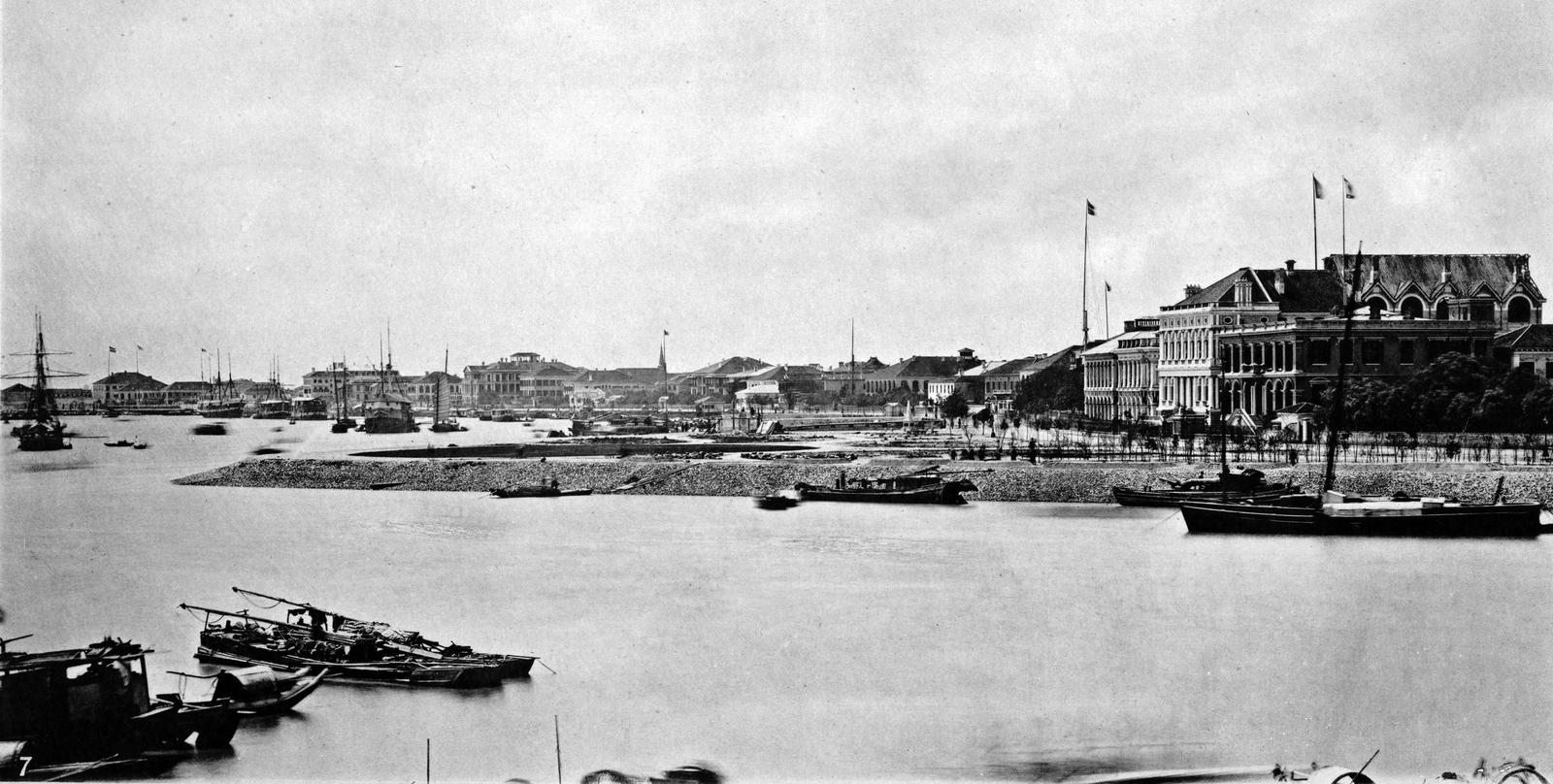
Shanghai was a modest county seat before the mid-nineteenth century treaties opened it to international trade. The Treaty of Nanking (1842) established it as one of China's first treaty ports, and within decades it became the greatest commercial center in Asia. The International Settlement and French Concession operated as self-governing international districts—zones where merchants from many nations conducted business under their own familiar legal frameworks.
The Bund waterfront was designed to impress. The great trading houses—Jardine Matheson, Butterfield & Swire, HSBC—built headquarters that proclaimed the confidence of international commerce. Behind the grand facades lay the real business: bills of lading, insurance policies, letters of credit, and the commodity trades that connected China to global markets.
At Your Table
Chinese culinary tradition recognizes eight great regional cuisines, and Shanghai sits at their crossroads. The city's position at the mouth of the Yangtze drew influences from upriver Sichuan and Hunan, from neighboring Jiangsu and Zhejiang, from Cantonese traders and Fujianese merchants. What emerged was haipai—"Shanghai style"—a cosmopolitan approach to food that borrowed freely from all sources and combined them into something distinctly local.
Xiaolongbao—soup dumplings—exemplify the precision of Shanghai cuisine. The thin wrapper must be strong enough to contain the hot broth yet delicate enough to collapse at the first bite. The filling, a mixture of pork and aspic that melts during steaming, requires exact proportions. The pleating—ideally eighteen folds, crimped to a twist at the top—demonstrates the cook's mastery. What appears simple conceals extraordinary technique, a characteristic Shanghai values.
The treaty port era brought culinary traditions from across the globe. Russian émigrés fleeing the Revolution introduced borscht and smoked fish; Jewish refugees from Europe opened bakeries and delicatessens; British traders demanded their clubs serve proper roasts. The haipai sensibility absorbed these influences without anxiety, treating Western food as one more ingredient in the city's culinary repertoire. Shanghai has always been comfortable borrowing from the outside world and making it local.
Cultural Encounters
The Bund remains Shanghai's most legible monument to the treaty port era. Walking from the former British Consulate at its northern end to the Hongkong and Shanghai Bank building anchoring its center, you pass through an architectural catalog of international commerce: Neo-Classical trading houses, Art Deco hotels, the clock tower of the Customs House that regulated trade entering China. The view across the river to Pudong's skyscrapers creates a visual dialogue between the nineteenth century and the twenty-first.
The shikumen—"stone gate" lane houses—represent Shanghai's distinctive response to treaty-port population pressures. These row houses, combining Western structural techniques with Chinese courtyard principles, packed families into dense neighborhoods where daily life spilled into shared alleyways. Many survive, though now as boutique hotels, galleries, and restaurants rather than working-class housing. The renovated Xintiandi district preserves the form while transforming the function, a pattern Shanghai has repeated throughout its modern history.
Suzhou Creek, flowing into the Huangpu just north of the Bund, was the city's industrial spine. Here the cotton mills, silk filatures, and flour mills that made Shanghai China's manufacturing center rose along banks crowded with barges and sampans. The factories have mostly been converted to creative spaces and residential lofts, but the industrial architecture remains—massive brick structures whose scale testifies to the commercial ambitions of the treaty-port era.
A Note from Your Expert
Shanghai has reinvented itself repeatedly—from fishing village to treaty port to revolutionary cradle to global financial center—and each transformation has been driven by its position as China's point of contact with the outside world. The city's identity is bound up with openness, with adaptation, with the creative friction that comes from different cultures coexisting in close quarters. The contemporary skyline rising across Pudong isn't a break with this history but a continuation of it: Shanghai has always looked toward the future, always been willing to tear down and rebuild in pursuit of the next version of modernity.