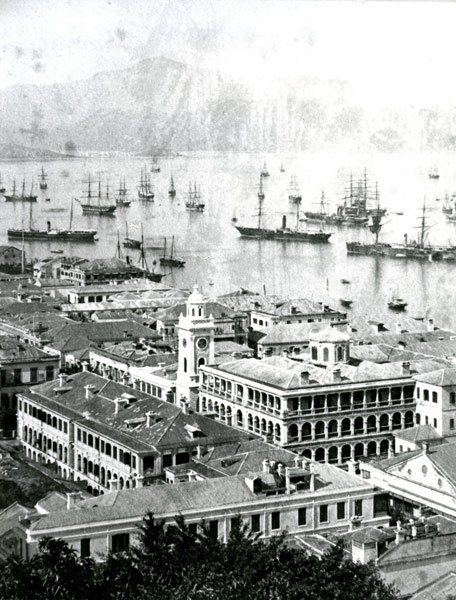
Hong Kong marks the pivot point between our two voyages. Arriving from Tokyo via Shanghai, passengers on the Tokyo → Hong Kong voyage have traced the cosmopolitan port world from Japan through Korea to China. Now, departing for the Ryukyu Islands, the return voyage turns back toward Japan—but by a very different route, through waters that carried silk and sugar long before the nineteenth-century trading houses arrived.
The harbor that became one of Asia's greatest commercial centers was, for centuries before, a stopping point on older trade routes. Junks from Fujian and Guangdong sheltered here; Ryukyuan tribute ships passed these waters en route to Fuzhou. The infrastructure of piers and godowns was built atop a maritime geography that had connected South China to Japan for a thousand years.
At Your Table
Hong Kong's food culture draws from deep Cantonese roots while absorbing influences from across the globe. The yum cha tradition—dim sum served from rolling carts in crowded banquet halls—represents one of the world's great small-plate cuisines, each portion sized for sharing, each selection a conversation about taste and expertise. The cha chaan teng tea restaurants offer a different kind of fusion: Hong Kong-style milk tea pulled through silk stockings, macaroni soup with ham, instant noodles elevated to comfort food art.
Cantonese cuisine at its highest levels prizes the freshest ingredients and the lightest touch, allowing the quality of the raw materials to speak. This philosophy—technique in service of essence rather than transformation—reaches its apex in Hong Kong, where discerning diners and abundant wealth have created one of the world's great food cities.
Cultural Encounters
Central and Western District layer Hong Kong's histories in compressed space: temples and churches, herbalist shops and wine bars, wet markets and office towers within steps of each other. The Mid-Levels Escalator system cuts through neighborhoods that reveal how the city works—the density, the commerce, the coexistence of unlike things that is Hong Kong's genius and its signature.
A Note from Your Expert
As we depart Hong Kong, we leave behind the cosmopolitan port world that has shaped our voyage thus far. Ahead lie the island chains that connected empires through older, less documented routes: the Ryukyu Kingdom, the Satsuma domain, the maritime borderlands where sovereignty was negotiated through trade rather than treaties. From this global trading hub, we sail into a history written in coral and sugar cane, silk and tribute, the quiet commerce of islands that made larger histories possible.