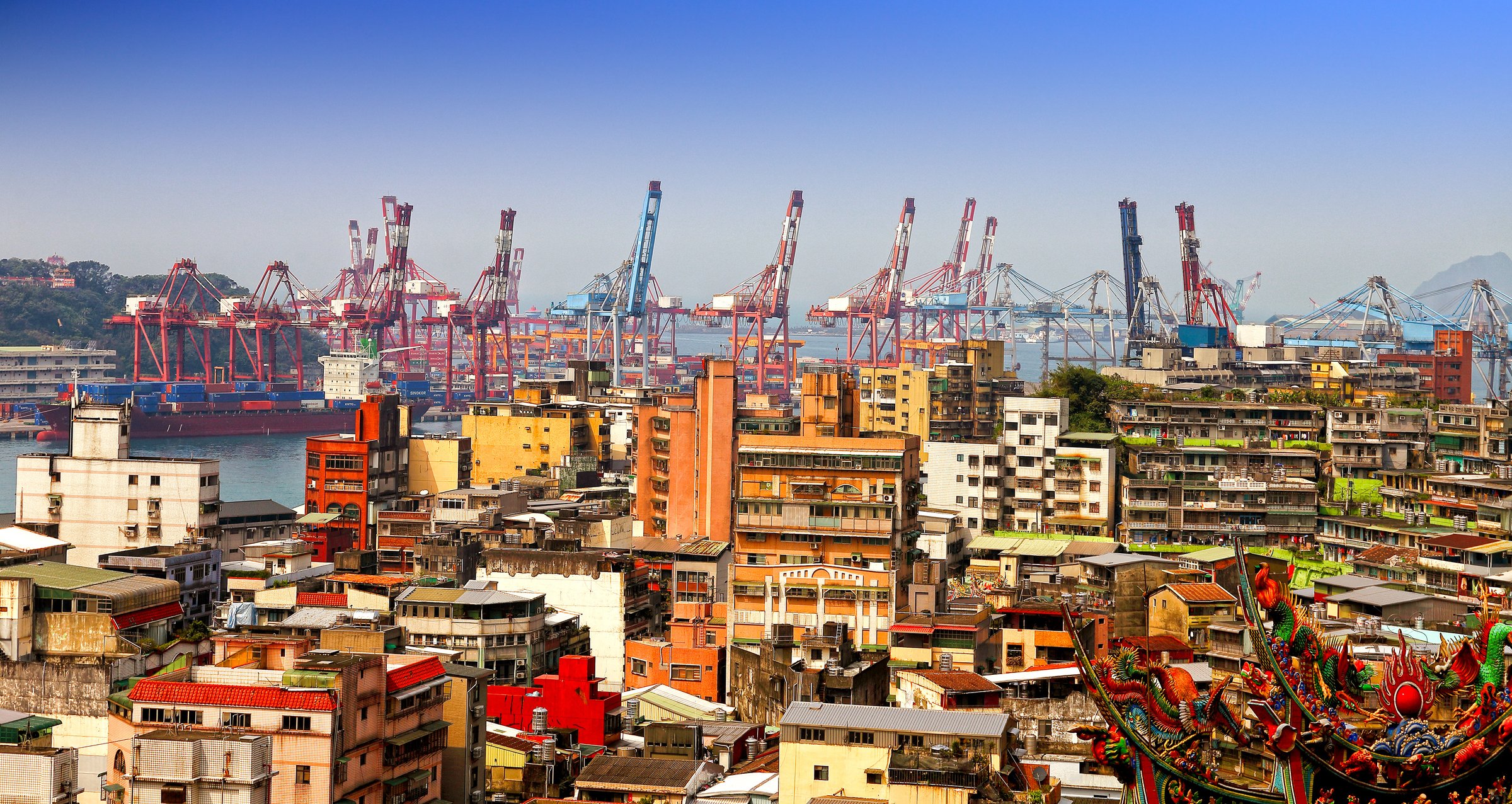
Taiwan—Formosa, the "Beautiful Island"—has been shaped by successive waves of cultural influence. Indigenous peoples have inhabited the island for millennia; Chinese settlement transformed the western coastal plains; Dutch, Spanish, and Japanese governance each left distinctive marks on the landscape and culture. This layering of traditions, visible in temple architecture, food culture, and urban form, gives Taiwan its particular character.
Keelung's harbor, where our ship calls, witnessed the arrival of each new influence from the sea. The city's historic districts preserve traces of this layered history: Qing-era temples, Japanese colonial buildings, and the distinctive vernacular architecture that emerged from generations of adaptation. Today's bustling port city continues a tradition of maritime exchange that stretches back centuries.
At Your Table
Taiwan's night market culture represents one of the world's great street food ecosystems. The markets that spring up after dark in virtually every neighborhood aren't tourist attractions but the genuine fabric of daily life—places where families eat dinner, friends gather, and the island's culinary diversity displays itself in stall after crowded stall. The noise, the smells, the steam rising from countless woks and grills create an atmosphere impossible to replicate in any restaurant.
The island's cuisine reflects its layered history: Fujianese and Hakka traditions brought by Chinese settlers, indigenous ingredients and techniques, fifty years of Japanese influence, and the mainland regional cuisines that arrived with the Nationalist government in 1949. Niúròu miàn—beef noodle soup—exemplifies this fusion: a dish created by soldiers from Sichuan and Hunan using techniques and ingredients adapted to their new home, now considered Taiwan's national comfort food.
Tea culture in Taiwan reaches its highest expression in the high mountain oolongs cultivated at altitudes above 1,000 meters. Scientific cultivation methods and cooperative structures developed over generations have created an industry where agricultural knowledge meets aesthetic refinement. Visiting a tea farmer in the hills above Taipei, watching the precise choreography of processing leaves that were picked that morning, reveals a craft tradition that unites farming expertise with cultural sophistication.
Cultural Encounters
Japanese-era architecture marks Taipei's cityscape in ways both obvious and subtle. The Presidential Office Building, the National Taiwan Museum, the old railway station—these grand public structures proclaimed early twentieth-century modernity while establishing the infrastructure that continues to serve the city today. But the influence runs deeper: the grid of streets, the urban planning principles, the parks and boulevards all reflect concepts of how a modern city should be organized.
Temple culture in Taiwan preserves forms of Chinese folk religion in vibrant, living practice. The temples that anchor every neighborhood worship a syncretic mix of Buddhist, Taoist, and local deities; the festivals that punctuate the calendar bring entire communities into the streets for performances, processions, and offerings. This is religion as lived practice rather than historical artifact, integrated into daily life in ways that continually surprise visitors expecting a more secular modernity.
Taiwan's indigenous peoples—sixteen officially recognized groups with distinct languages and cultures—have inhabited the island for thousands of years before any Chinese arrived. Cultural centers and museums now work to preserve and transmit traditions that earlier policies sought to suppress. Understanding Taiwan requires recognizing that the Chinese and Japanese histories visible in the lowland cities are only part of a deeper, more complex story written across the mountains and eastern coast.
A Note from Your Expert
Taiwan is a place where multiple histories coexist—often in the same building or bowl. A Japanese-era train station serves Taiwanese commuters beneath signs in Chinese characters; a beef noodle shop preserves recipes brought by soldiers from Sichuan seventy years ago; an indigenous weaver works patterns handed down for generations in a village that was once a model settlement for cultural programs. The island's complexity rewards attention, and its food scene offers one of the most accessible ways to encounter histories that might otherwise remain invisible.