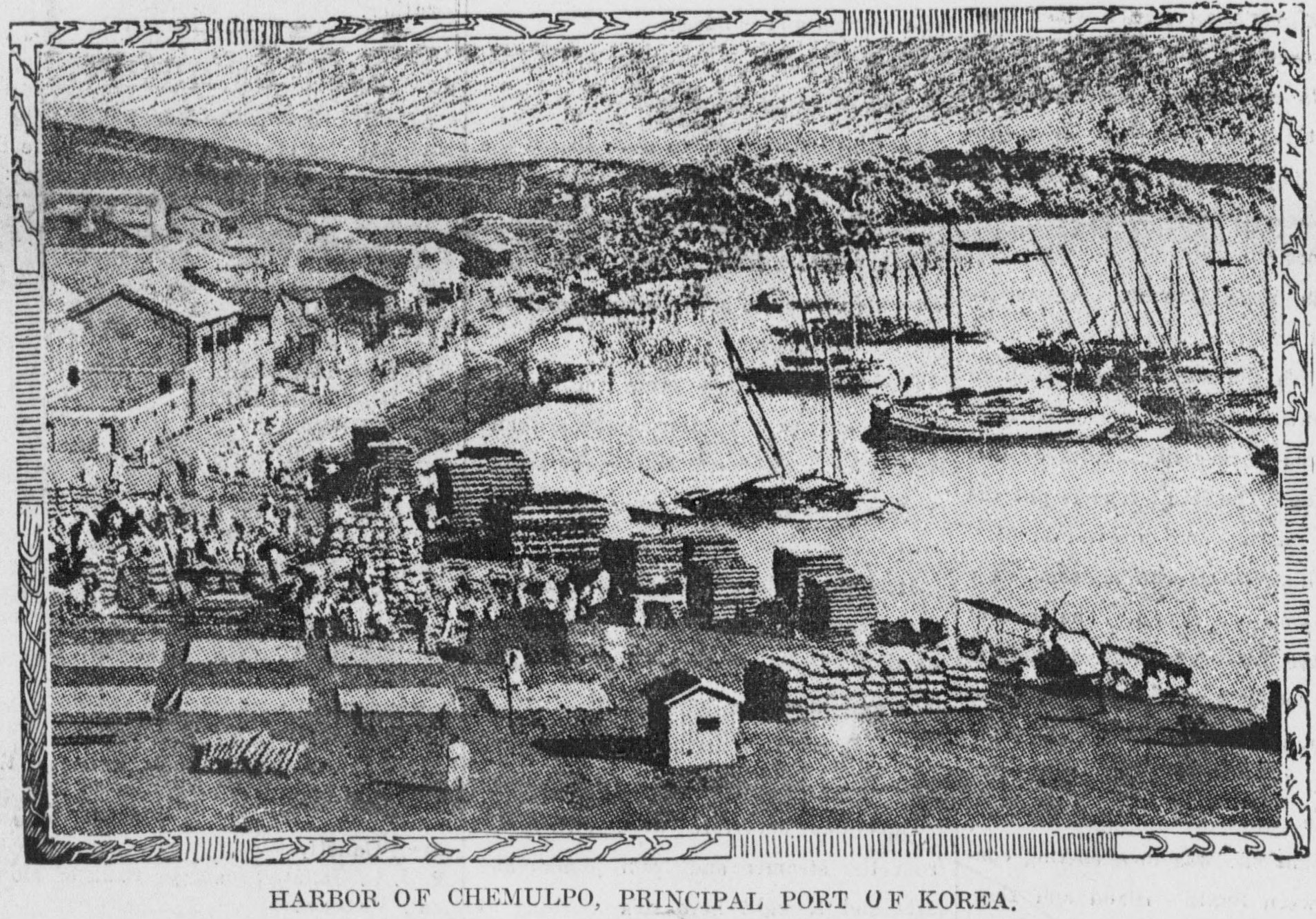
Korea was the last East Asian state to open to international trade. The Treaty of Ganghwa (1876) established Incheon as a treaty port, its waterfront organized into distinct Japanese, Chinese, and Western districts—each with its own architectural character and commercial culture.
Seoul, an hour inland, remained the heart of the Joseon dynasty until it was incorporated into the Japanese empire in 1910. Today the old treaty port district in Incheon survives as a living museum of international architecture—walk its streets and you can still read the boundaries between communities in the changing building styles.
At Your Table
Jajangmyeon—thick wheat noodles in black bean sauce—is Korea's most popular delivery food and Incheon's culinary gift to the nation. The dish was invented in the Chinatown that developed here after the port opened, a Korean adaptation of a Shandong noodle dish created by Chinese immigrants for local tastes. The sauce is sweeter, thicker than the Chinese original; the noodles are chewier. It's neither Chinese nor traditionally Korean, but something that could only have emerged from the cultural mixing of a treaty port.
Seoul's food traditions reach deeper into the peninsula's history. The elaborate cuisine developed for the Joseon royal court—complex preparations requiring days of skilled labor—has been preserved and revived as a culinary art form. At the other end of the spectrum, banchan culture—the array of small dishes that accompanies every Korean meal—expresses a philosophy of the table where sharing is fundamental and variety is expected. The meal is not about one dominant dish but about the harmony of many elements.
Fermentation anchors Korean cuisine in ways that become apparent only after multiple meals. Kimchi, of course, but also doenjang (fermented soybean paste), gochujang (fermented chili paste), ganjang (soy sauce), and countless other jang preparations—each household traditionally maintained its own crocks, and the quality of a cook was measured by the depth of these fermented foundations. The practice continues even in apartment buildings, with rooftop terraces given over to clay pots aging their contents in the sun.
Cultural Encounters
Incheon's treaty port districts have been preserved as open-air museums of colonial architecture. Walk from the former Japanese concession, with its tile-roofed banks and trading houses, to the Chinese quarter with its ornate gates and noodle restaurants, to the slopes where Western consulates and customs houses once stood. The boundaries are still legible—you can see where Japanese jurisdiction ended and Chinese authority began simply by noting when the building styles change.
Seoul's five grand palaces embody Confucian governance made visible in architecture. Gyeongbokgung, the primary royal residence, was laid out according to principles that placed the throne room at the cosmic center, with all other buildings arranged in hierarchies of importance radiating outward. The daily changing of the guard ceremonies are modern reconstructions, but the spatial logic they occupy is original: every approach, every courtyard, every gate was designed to reinforce the centrality of royal authority and the ordering of heaven and earth.
The hanok villages preserved in Seoul offer glimpses of traditional Korean domestic architecture—courtyard houses with heated floors (ondol) and curved roof lines designed according to geomantic principles. These homes were organized to separate male and female spaces, to manage seasonal temperature extremes, and to situate the family within larger cosmological frameworks. Walking through Bukchon or Namsangol, you move through spatial arrangements that governed daily life for centuries.
A Note from Your Expert
Korea's transformation over the past century has been so rapid, so complete, that it can be difficult to sense the older layers beneath the contemporary surface. But they're there—in the food traditions that anchor identity, in the Confucian principles that still shape social relations, in the language that preserves hierarchies of respect. The division of the peninsula, visible on any map, shapes contemporary Korean identity in ways both obvious and subtle: the urgency of economic development, the importance of national culture, the complex relationship with Japan and China all derive in part from the trauma of partition and the unfinished business of the twentieth century.