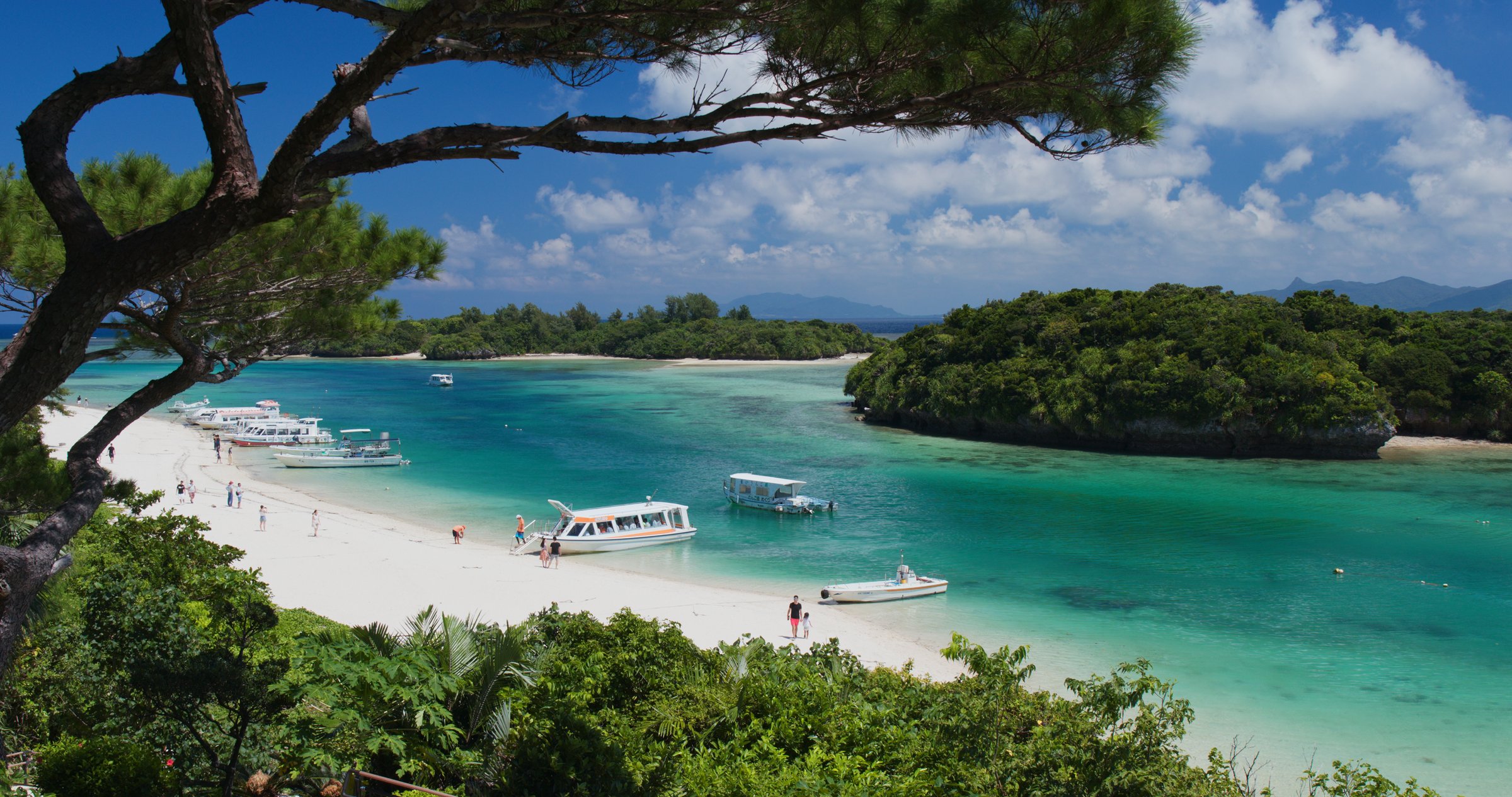
Kabira Bay, Ishigaki—the jewel of the Yaeyama archipelago, where turquoise waters meet centuries of maritime history.
Ishigaki is the gateway to the Yaeyama archipelago, the southernmost islands of what was once the Ryukyu Kingdom. Closer to Taiwan than to Okinawa, these islands occupied an ambiguous position in the maritime world of East Asia. Ryukyuan officials administered taxes here; Chinese fishermen and traders frequented these waters; the exact boundaries of sovereignty remained conveniently fluid.
The islands' remote position in the Ryukyu hierarchy shaped local life in distinctive ways. Today's peaceful beaches and coral reefs belie a complex history of taxation, trade, and cultural development that connected these small islands to the larger currents of East Asian commerce and politics.
At Your Table
Yaeyama soba differs from its Okinawan cousin in ways that reflect the islands' distinct identity within the Ryukyu world. The noodles are round rather than flat, the broth lighter, the toppings more likely to include the local pork preparations that developed in islands where refrigeration was impossible and preservation techniques were essential. The dish is simpler than mainland Okinawan soba—an island cuisine shaped by scarcity and distance from the capital at Shuri.
The tropical climate produces ingredients unknown in mainland Japan: gōyā (bitter melon) in preparations that balance its astringency, umi budō (sea grapes) with their distinctive pop and ocean flavor, pork prepared in every conceivable way because nothing could be wasted. The Yaeyama version of Okinawan cuisine tends toward the even more intensely porcine—whole-animal eating perfected through necessity.
Awamori, the rice spirit of the Ryukyus, has been distilled in these islands for centuries. Unlike Japanese shōchū, awamori uses Thai-style black kōji mold—a technique that arrived through trade routes connecting the Ryukyus to Southeast Asia. The spirit improves with age, and the tradition of maintaining kame pots passed down through generations creates family heirlooms that are literally consumed. In the Yaeyamas, awamori production continues as a craft tradition linked to specific households and specific vessels.
Cultural Encounters
The Yaeyama islands maintain their distinct identity within Okinawa Prefecture—a region within a region, with their own dialect (virtually incomprehensible to mainland Okinawans), their own textile traditions, their own repertoire of songs and dances. The sanshin—the three-stringed instrument that defines Ryukyuan music—sounds different here, accompanying lyrics in the Yaeyama language that preserve histories otherwise lost.
The coral reef ecosystems surrounding Ishigaki supported fishing communities for generations, their knowledge of tides, currents, and fish behavior accumulated over centuries of observation. Traditional fishing practices continue alongside modern tourism, though the balance shifts each year. The relationship between islanders and the sea that sustains them—practical, spiritual, economic—remains visible in daily life in ways that more developed coastlines have lost.
The pace of life in the Yaeyamas operates on "island time"—a phrase that tourists often misunderstand. It's not laziness but a different relationship to urgency, one shaped by environments where rushing accomplishes little and attentiveness to natural rhythms (tides, seasons, weather) matters more than artificial schedules. The islands' remoteness created cultures adapted to isolation, where self-sufficiency and patience were survival skills.
A Note from Your Expert
The Yaeyamas represent the furthest reach of the Ryukyu world—the point where Japan, Taiwan, and the tropics meet and merge. Standing on Ishigaki, you're closer to Taipei than to Naha, closer to Manila than to Tokyo. This geographic reality shaped everything about island life: the cuisine inflected by Southeast Asian flavors, the musical traditions that carry echoes of more southerly islands, the sense of existing at the edge of multiple worlds rather than at the center of any one of them.