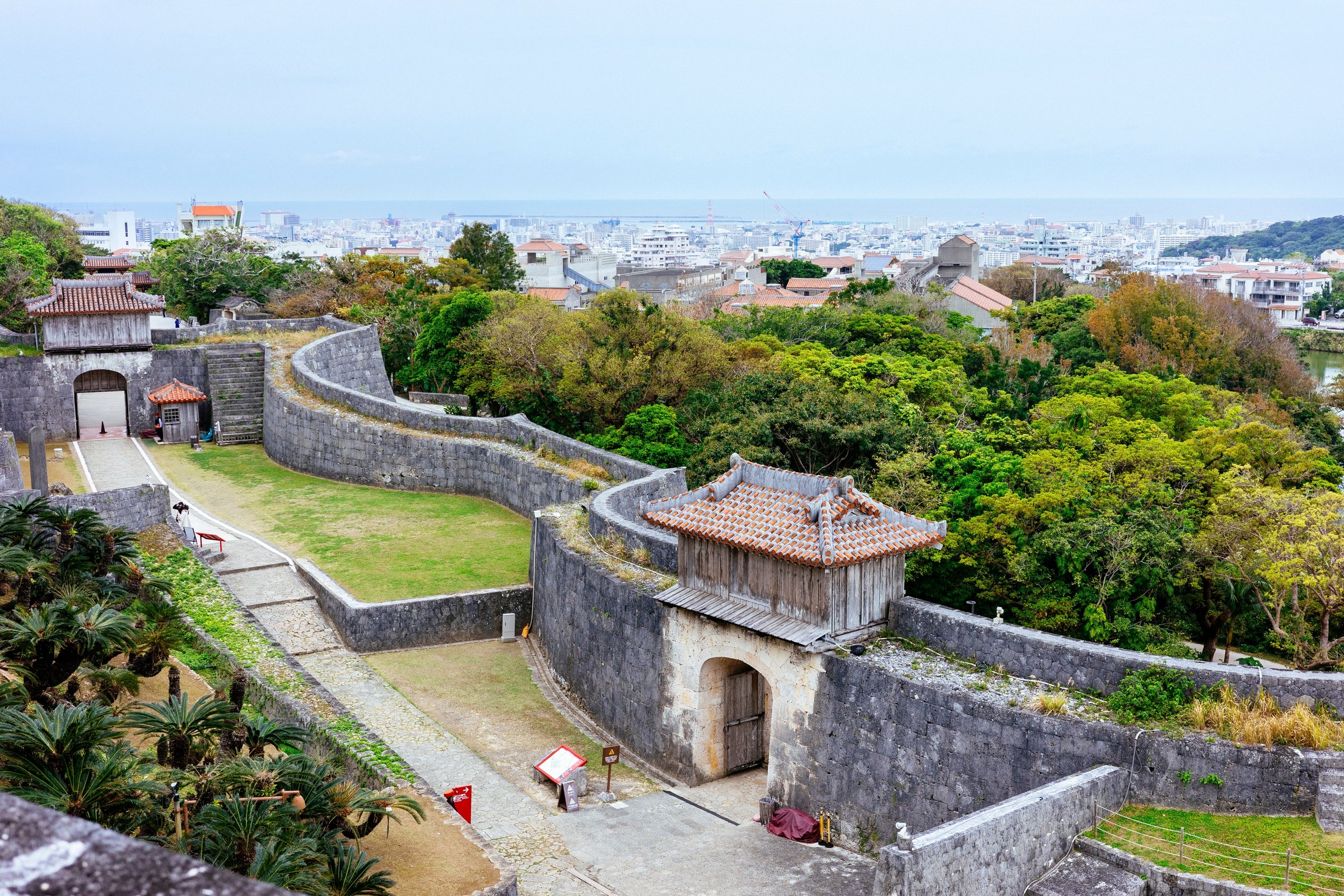
Shuri Castle, rising above the port city of Naha, was the seat of the Ryukyu kings for over four centuries. From this red-roofed palace, the kingdom conducted its remarkable diplomatic balancing act: paying tribute to the Ming and Qing emperors while maintaining careful relationships with Japan's Satsuma domain. The castle's architecture—Chinese in inspiration but distinctively Ryukyuan in execution—embodies this dual orientation and the sophisticated statecraft it required.
Naha's harbor was the hub of a trading network that once stretched from Southeast Asia to Korea. Here the tribute ships were loaded with Ryukyuan products and Chinese goods destined for the imperial court in Beijing; here the profits of the China trade were counted and distributed. The kingdom styled itself the "Bridge of Nations"—a small state that survived by making itself indispensable to larger powers through diplomatic skill and commercial value.
At Your Table
Ryukyuan court cuisine developed through centuries of contact with China, filtered through island sensibilities and ingredients. The formal dishes prepared for Chinese envoys displayed the kingdom's sophistication while the everyday foods of palace and port reflected local adaptations—pork preparations that rivaled Chinese technique, vegetable dishes incorporating tropical plants unknown on the mainland, sweet potato foundations that sustained the population when rice was scarce.
The pork tradition in Okinawa runs extraordinarily deep. Rafute—belly pork braised for hours in awamori and brown sugar—exemplifies the slow cooking that makes tough cuts tender and rich. Mimigā (pig ear), chiragā (face meat), and tebichi (trotters) demonstrate a whole-animal approach where nothing is wasted. This was peasant cooking elevated through technique—the heritage of an island where meat was precious and skill extracted maximum value from every part.
Gōyā champurū—the iconic stir-fry of bitter melon, tofu, pork, and eggs—represents Okinawan cuisine at its most everyday and most distinctive. The bitterness of the gōyā, balanced by the richness of the other ingredients, is an acquired taste that divides visitors. But the dish exemplifies something essential about Okinawan food: strong flavors boldly combined, vegetables central rather than peripheral, the influence of Chinese technique visible but transformed by local practice.
Cultural Encounters
Shuri Castle has been destroyed and rebuilt multiple times—most recently after the devastating 2019 fire. The current reconstruction continues the tradition of renewal that has defined the site since its origins. Walking the stone approaches to the castle, you trace the processional routes that Chinese envoys and Japanese officials would have followed, ascending through gates that marked increasing proximity to royal authority. The reconstruction is not the original, but neither was any of its predecessors: the castle has always been a work in progress, continually renewed as circumstances demanded.
The Tsuboya pottery district preserves Okinawa's ceramic traditions in working studios and galleries. The distinctive styles—arayachi (unglazed) and jōyachi (glazed)—developed through centuries of production, influenced by Chinese and Japanese techniques but unmistakably Okinawan. Watching potters shape vessels on traditional wheels, firing them in climbing kilns that have been maintained for generations, reveals a craft tradition that connects contemporary practice to centuries of accumulated knowledge.
The makishi kōsetsu ichiba—the public market—offers the most accessible encounter with Okinawan daily life. The colors of tropical fish, the piles of unfamiliar vegetables, the cuts of pork that tell a different story of animal anatomy than any mainland butcher—all this creates a sensory experience that communicates Okinawan distinctiveness more immediately than any museum. The market vendors, many of them working stalls that have been in their families for generations, represent a continuity of trade that the tourism industry has overlaid but not displaced.
A Note from Your Expert
Okinawa's identity is layered in ways that can be difficult to parse from the outside. Ryukyuan history, Japanese administration, American occupation, and contemporary tourism have all left their marks, and Okinawans themselves navigate these layers with varying degrees of comfort. The 1945 Battle of Okinawa—which killed perhaps a third of the civilian population—remains a defining trauma whose effects persist in memorial sites, in family stories, in the continuing American military presence that dominates parts of the island. Encountering Okinawa means encountering this complexity: a culture neither Japanese nor entirely distinct from Japan, shaped by histories of trade, diplomacy, and survival.