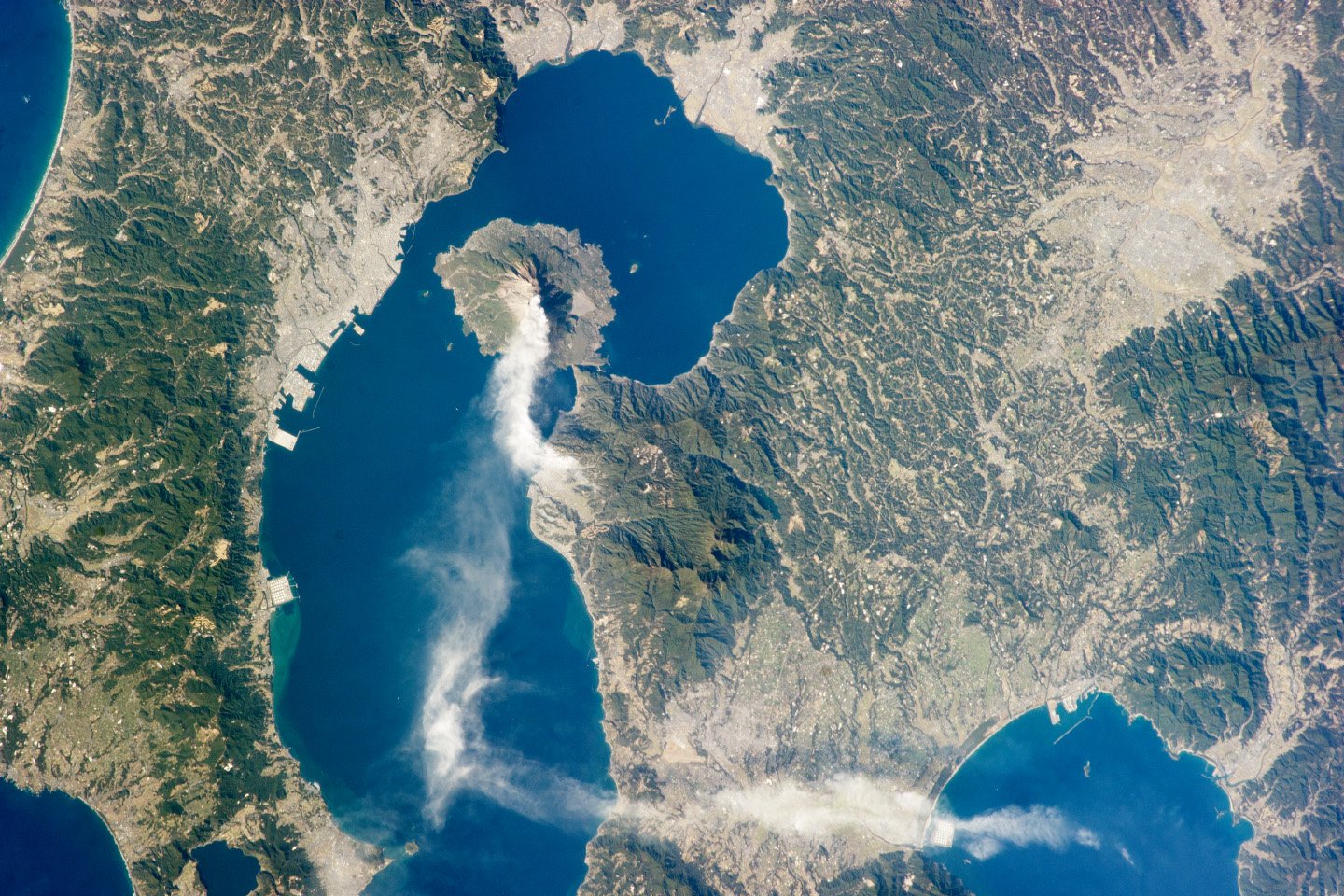
Kagoshima Bay, dominated by the smoking cone of Sakurajima volcano, was the seat of the Shimazu clan for seven centuries. From this castle town, the Shimazu built a domain that would become one of the most powerful in Japan. Their wealth came from sugar, silk, and the profits of maritime trade channeled through their commercial networks extending to the Ryukyu islands and beyond.
By the mid-nineteenth century, Satsuma was building steam engines, reverberatory furnaces, and modern weapons at the Shūseikan industrial complex. When British warships arrived at Kagoshima in 1863, Satsuma's modern guns—purchased with trade profits—demonstrated the domain's technological ambitions. The domain that had built its wealth on maritime commerce would become a leader of the Meiji Restoration, supplying many of the new government's most influential figures and helping to transform Japan into a modern nation-state.
At Your Table
Kurobuta—Berkshire black pigs—arrived in Satsuma four centuries ago, possibly through trade connections with China or Southeast Asia. The breed thrived in the volcanic soil and subtropical climate, developing characteristics that would eventually make Kagoshima pork among the most prized in Japan. The meat is fattier than standard Japanese pork, the flavor deeper—qualities that reflect centuries of selective breeding in a specific place and climate.
Satsuma-age—fried fish cakes—bear the domain's name for good reason. The technique of mincing fish, seasoning it, and deep-frying the result developed here, becoming both everyday food and trademark export. Regional variations abound: some include vegetables, some are spicy, some are shaped into elaborate forms for special occasions. The dish exemplifies Satsuma cuisine's transformation of abundant local ingredients into distinctive products.
Sweet potato (satsuma-imo—the name is no coincidence) arrived from Ryukyu in the seventeenth century and transformed Satsuma's food culture. The tuber grew in volcanic soil where rice struggled, feeding the domain's population through famines that devastated other regions. Today sweet potatoes appear in everything from desserts to distilled spirits: imo-shōchū, made from Satsuma sweet potatoes, is the definitive spirit of southern Kyushu, its earthy sweetness reflecting the volcanic terroir that produces the raw material.
Cultural Encounters
Sengan-en garden represents Shimazu wealth and taste made landscape. Built in 1658 by the nineteenth-generation lord, the garden incorporates Sakurajima volcano and Kagoshima Bay as "borrowed scenery"—a technique that makes the active volcano into a garden ornament, domesticating geological power through aesthetic framing. The adjacent Shōko Shūseikan museum occupies Japan's first Western-style factory complex, where Satsuma produced the weapons and machinery that would help transform the Japanese political order.
Sakurajima itself demands attention—an active volcano so close to the city that ash falls regularly on downtown streets. Living with Sakurajima has shaped Kagoshima's character: the readiness for eruption, the casual relationship with geological time, the infrastructure of shelters and evacuation routes integrated into daily life. The volcano produces the citrus (komikan) and radishes (sakurajima daikon, the world's largest) that are local specialties, volcanic soil transformed into agricultural abundance.
The Shimazu's role in the Meiji Restoration marks Kagoshima as a place where Japan's modern history was made. Saigō Takamori, the "last samurai" who led the Restoration and then died rebelling against the government he created, is memorialized throughout the city. The history reflects the complexity of modernization—a domain that built its wealth on maritime commerce and used that wealth to industrialize became a crucible of Japanese modernity, its leaders shaping the nation that emerged from the Tokugawa order.
A Note from Your Expert
Kagoshima was the domain that looked outward—through Ryukyu to China, through trade to Southeast Asia, and eventually through the Meiji Restoration to the modern world. The Shimazu lords built their power on connections that other domains couldn't access, converting geographic position into commercial advantage and commercial advantage into political power. The volcano that dominates the bay serves as an apt metaphor: Satsuma's energy was volcanic, capable of destruction and creation in equal measure, shaping the landscape of Japanese history through forces that couldn't be controlled, only channeled.