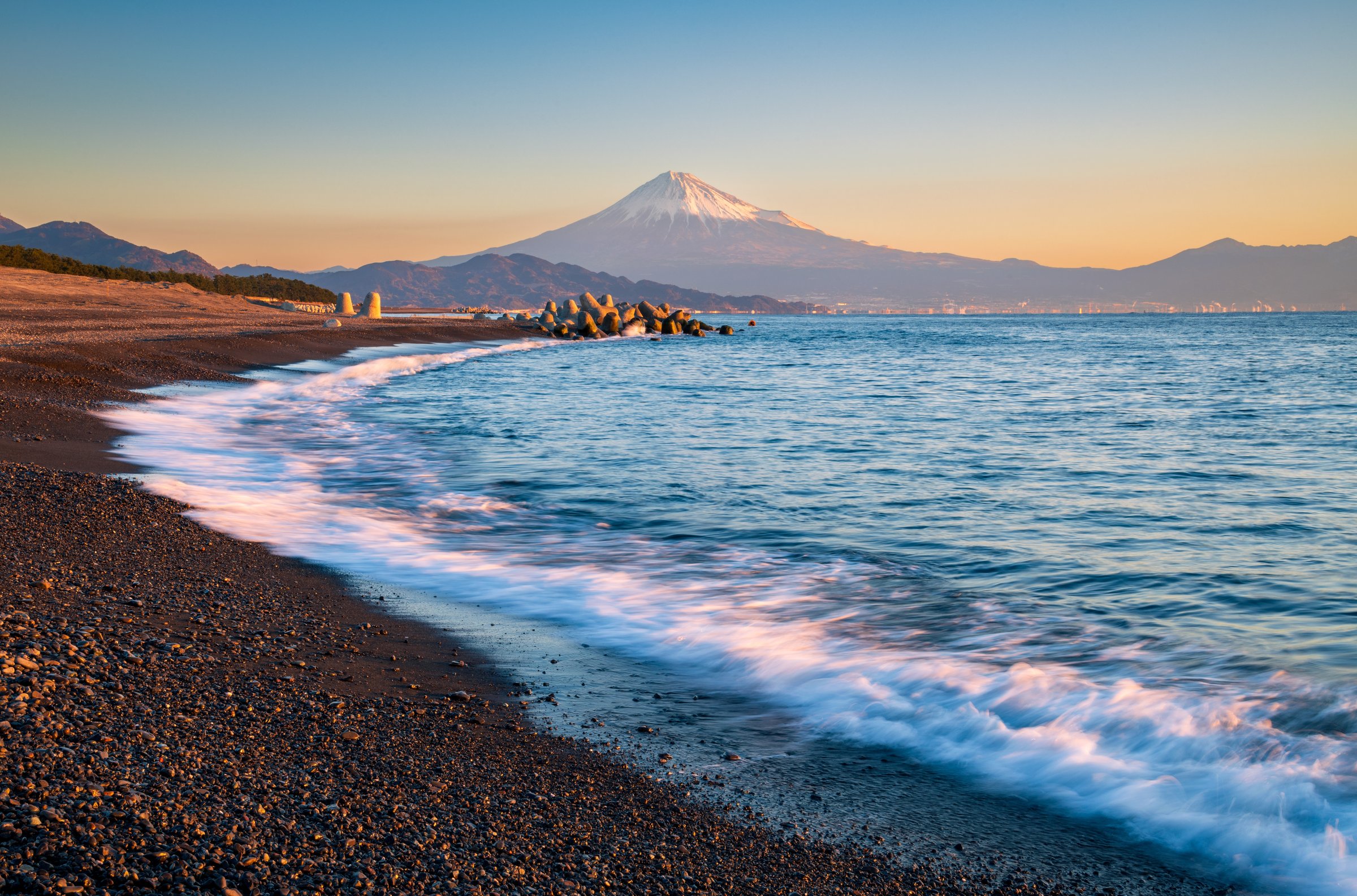
Shimizu sits at the base of the Izu Peninsula, sheltered by the pine-covered sand spit of Miho-no-Matsubara—a prospect celebrated in Japanese art for centuries. Mount Fuji rises beyond, its perfect cone visible from the harbor on clear days. This is the landscape that inspired Hokusai and Hiroshige, the view that welcomed travelers approaching the Shogun's capital from the sea.
In the Meiji era, Shimizu became Japan's premier tea port. Green tea from the surrounding Shizuoka hills was processed and exported to the West, transforming a traditional beverage into a global commodity. The port's position—close to the tea-growing districts, connected by the new railway to Tokyo—made it the natural outlet for an industry that exemplified Japan's integration into world markets.
At Your Table
Shizuoka Prefecture produces more tea than any other region of Japan—the hills behind Shimizu are carpeted with the distinctive rows of tea bushes that have defined the landscape since Tokugawa times. The tea culture here is not ceremonial but agricultural: fields tended by families for generations, processing facilities that transform fresh leaves into finished products within hours of picking, and a local expertise that distinguishes subtle variations in flavor, aroma, and color.
Suruga Bay, the deep-water inlet that shelters Shimizu's harbor, produces seafood unavailable elsewhere. The bay's unusual depth—descending to nearly 2,500 meters—creates conditions for species rarely found so close to shore. Sakura ebi—tiny pink shrimp harvested only here—are a seasonal delicacy celebrated in local festivals and served in everything from rice dishes to tempura. The shrimp's name ("cherry blossom shrimp") evokes the pink clouds they form in spring waters.
Mount Fuji's volcanic geology shapes the local food supply in less obvious ways. The volcanic soil produces distinctive vegetables; the pure snowmelt water filters through porous rock to emerge in springs that supply tofu makers and sake brewers; the climate patterns created by the mountain's mass influence growing seasons throughout the region. Eating locally in Shimizu means tasting the effects of the volcano that dominates every view.
Cultural Encounters
The Tōkaidō—the great coastal road connecting Kyoto to Edo—passed through this region, and Shimizu served travelers approaching the Shogun's capital by both land and sea. The post stations that once provided lodging and fresh horses have mostly disappeared, but the route itself survives in modern highways and railways that follow the same geographic logic: the narrow coastal strip between mountains and sea that has always been Japan's main artery.
Miho-no-Matsubara—the pine grove on the sand spit extending into Suruga Bay—has been celebrated in Japanese literature and art for over a millennium. The combination of gnarled pines, white sand, and Mount Fuji rising beyond creates a composition that Japanese aesthetics identifies as sublime. UNESCO World Heritage status now protects the grove, though the view itself remains free: standing where countless artists have stood, seeing what Hokusai and Hiroshige saw, you connect to a tradition of landscape appreciation that predates and outlasts any individual work.
Tea plantation visits offer insight into an industry that bridged Tokugawa tradition and Meiji modernity. The cultivation techniques are centuries old; the processing machinery dates from the export boom of the late nineteenth century; the contemporary market strategies respond to global competition and changing tastes. Walking the rows between tea bushes, watching leaves progress through withering, rolling, and drying, you observe a craft that has continually adapted while maintaining essential continuity.
A Note from Your Expert
Shimizu sits at a threshold—where the sea road meets the mountain road, where the journey approaches its end. Mount Fuji, visible from the harbor on clear days, has served as a landmark for maritime travelers for as long as ships have sailed these waters. The view connects our sea voyage to the land routes that have organized Japanese life for centuries: the Tōkaidō we've paralleled, the capital we're approaching, the mountain that dominates the Japanese imagination. As our voyage nears its conclusion, Shimizu offers a moment to consider what the journey has revealed about the maritime world that made Japan.